
Peptides forPerimenopause
The evidence-based physician's guide to hormone, metabolic, and cellular support through the transition most medicine misses.

GUIDE
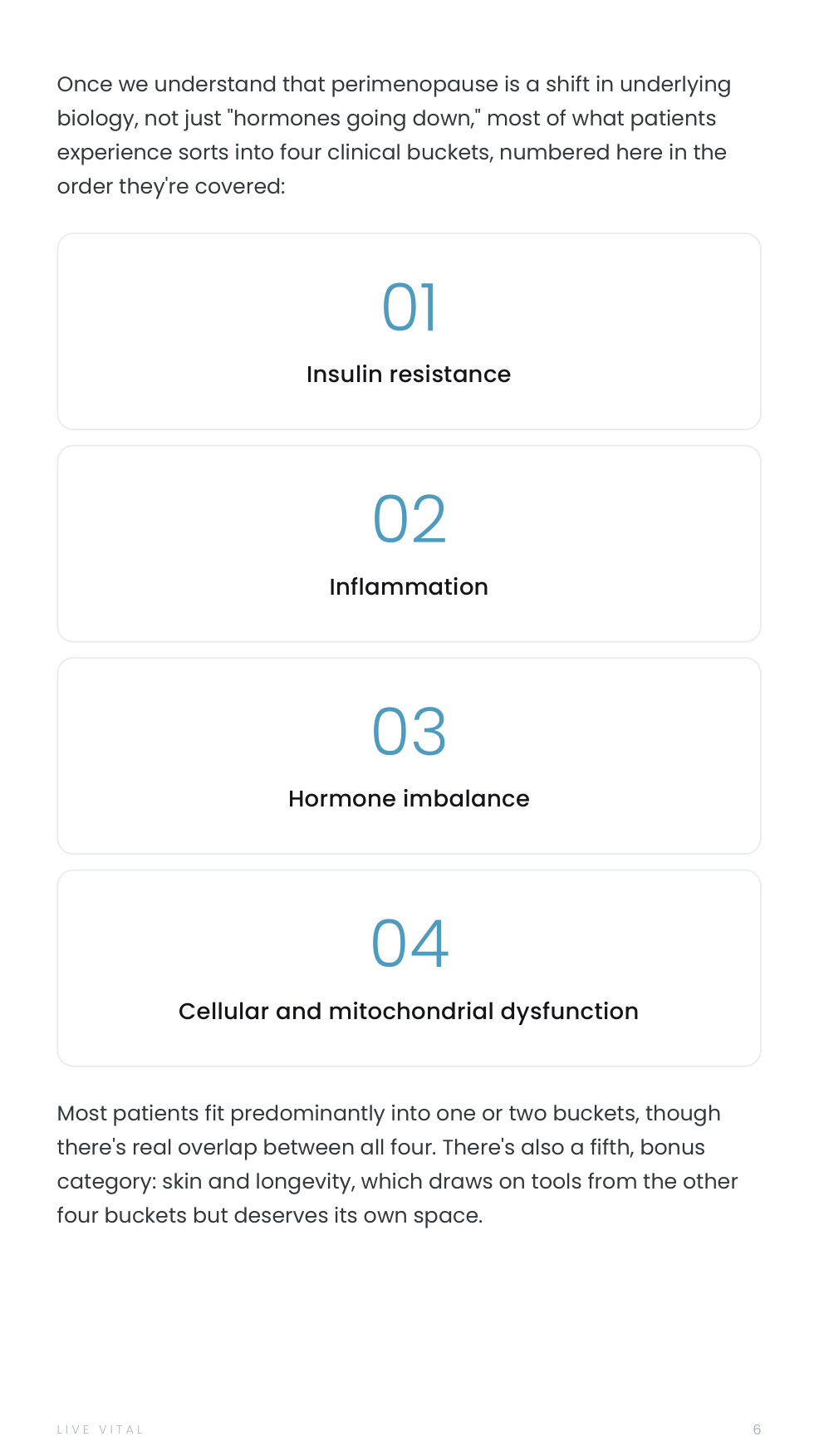
Perimenopause, sorted into clinical buckets
Once you understand perimenopause as a shift in underlying biology — not just "hormones going down" — most symptoms sort into four clinical buckets, plus a bonus. The guide walks through each, and the peptides that support it.
Insulin Resistance
New belly fat, rising A1c and cholesterol, sugar cravings — a direct physiologic effect of fluctuating estrogen, not a willpower problem.
Systemic Inflammation
Joint pain, histamine-type reactions, gut symptoms, disproportionate hot flashes — estrogen's anti-inflammatory brake coming off.
Hormone Imbalance
Low libido, poor sleep, loss of muscle tone, mood changes. MHT is the foundation — these peptides are the adjuncts that support it.
Cellular & Mitochondrial
Fatigue that doesn't track with sleep, brain fog, slow recovery. Supporting the energy machinery every cell runs on, directly.
Skin & Longevity
Skin and longevity aren't separate systems — they're downstream of the same metabolic, hormonal, and cellular processes covered above.
Which bucket fits you?
The guide ends with a plain-language self-check to help you spot where your symptoms cluster — and what to bring to a consult.
Find out →Told it's stress, aging, or in your head?
These are the symptoms that send women to a psychiatrist, a rheumatologist, or a cholesterol-focused visit — instead of to anyone thinking about hormones. Together, they're often one cluster: perimenopause.
- Brain fog & word-finding trouble
- New or worsening anxiety
- Joint pain & stiffness
- Belly fat & visceral weight gain
- New insulin resistance
- Low libido & poor sleep
Perimenopause can span up to a decade before a woman's final period — and it changes her metabolic health right along with her hormones. A single lab draw often looks normal because the picture is moving, not static.
Dr. Patrick Taylor, MD
A physician who won't dismiss your symptoms because the labs look normal.
Dr. Taylor practiced full-scope family medicine before founding Live Vital, a nationwide telehealth practice focused on hormone optimization, peptide therapy, and metabolic health. He also serves as Chief Medical Officer at Belle Health, leading protocol development for women's hormone and metabolic care nationally.
His interest isn't only clinical: a childhood cancer, a year of chemotherapy, and losing 100 pounds through diet and training shaped a practice built on individualized, evidence-based care.
"Perimenopause is one of the most under-recognized transitions in medicine. There is a clear physiologic explanation — and increasingly, evidence-based tools to address it."
40 pages of how a physician actually practices.
Not a supplement list. A clinical framework — with mechanisms, trade-offs, dosing philosophy, and honest notes on what the evidence does and doesn't yet support.
- Where each bucket shows up — and what shows up on labs
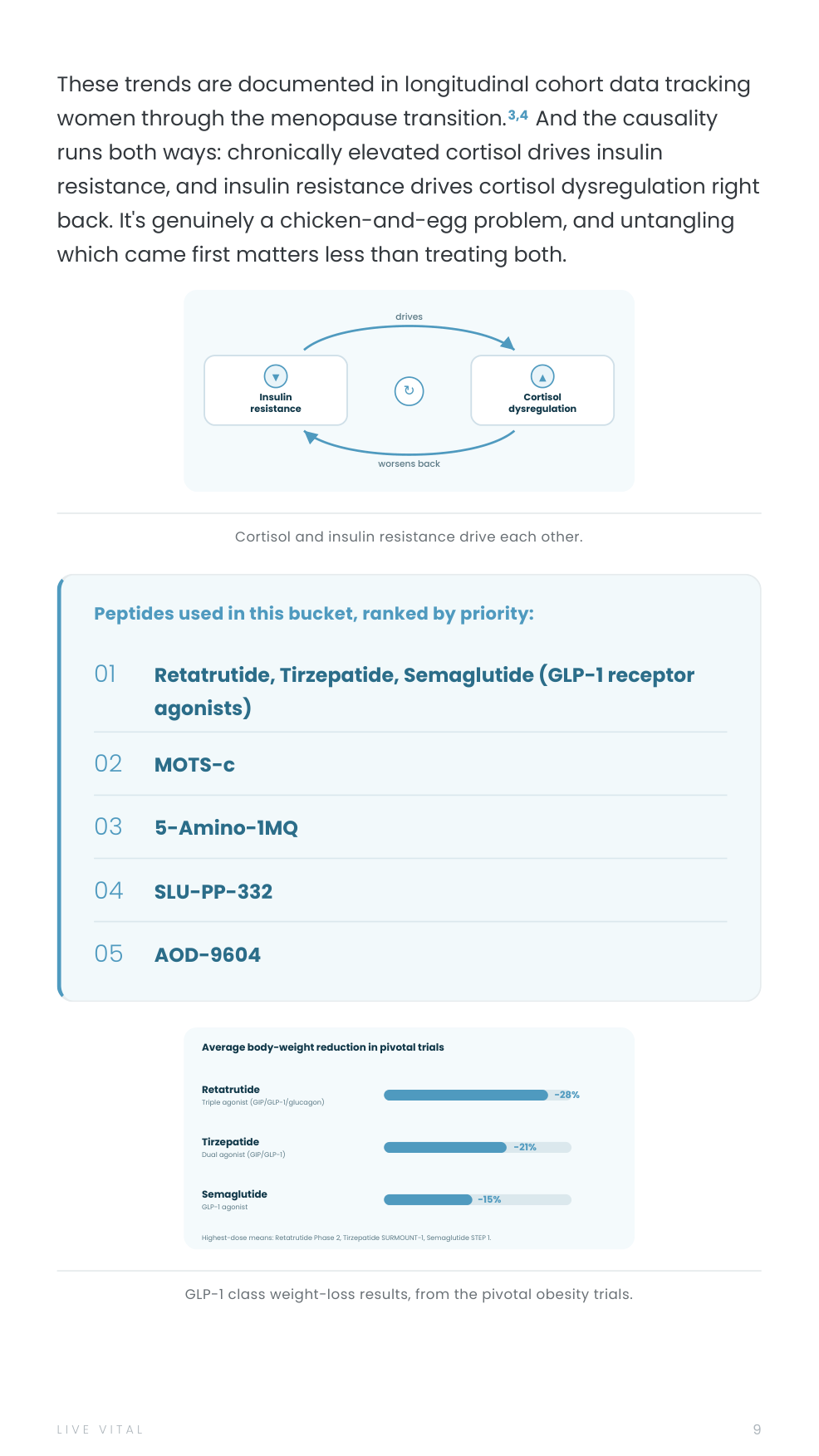
- Full-dose vs. microdose GLP-1s, and when each makes sense
- Choosing a GH secretagogue by strength vs. tolerability
- A closing self-check: which bucket fits you
 Free clinical guide
Get the full clinical guide
- All 4 clinical buckets + skin & longevity
- Every peptide, mechanism, and trade-off
- 32 peer-reviewed references
- Emailed straight to your inbox
Check your inbox, friend.
We just sent Peptides for Perimenopause to your email. It should arrive within a few minutes — check spam or promotions if you don't see it.